
Udyog Aadhaar
Swachh Bharat
machinery purchase subsidy

Investing in machinery is one of the biggest financial decisions for small and medium businesses. Whether you run a manufacturing unit, a food processing business, a textile workshop, or a fabrication plant, upgrading machinery can significantly improve production capacity and product quality. However, the cost of equipment often becomes a major barrier.

This is where the machinery purchase subsidy plays a crucial role. The government offers financial assistance under various capital subsidy schemes to encourage MSMEs to modernize their operations. But not every business qualifies automatically. Understanding who is eligible — and who isn’t — can save time, money, and unnecessary rejection.

Understanding Machinery Purchase Subsidy

A machinery purchase subsidy is a financial benefit provided by the government to reduce the cost of buying new plant and machinery. It is typically offered under capital subsidy schemes aimed at promoting industrial growth, modernization, and employment generation.

Instead of covering the full cost, the government provides a percentage of the machinery cost as financial assistance. This support helps MSMEs expand operations without overburdening their cash flow.

However, eligibility depends on specific criteria related to business type, classification, sector, and compliance status.

Why the Government Offers Machinery Subsidies

Machinery upgrades increase efficiency, productivity, and product quality. To strengthen India’s manufacturing ecosystem, the government promotes technology adoption among MSMEs.

The key objectives include:

  • ● Encouraging modernization

  • ● Increasing domestic production

  • ● Boosting exports

  • ● Generating employment

  • ● Supporting rural and semi-urban industries

Subsidy schemes are structured to ensure that small businesses remain competitive against larger enterprises.

Machinery Purchase Subsidy Eligibility India

Understanding machinery purchase subsidy eligibility in India is essential before applying.

Eligibility typically depends on the following factors:

1. Business Classification

Only registered MSMEs usually qualify for machinery subsidies. Your enterprise must fall within the defined micro, small, or medium category based on turnover and investment limits.

2. Nature of Business

Manufacturing units are more likely to qualify than purely trading businesses. Processing, production, and fabrication units are generally eligible.

3. New Machinery Requirement

Most schemes apply only to new machinery. Used or second-hand equipment is rarely covered.

4. Sector-Specific Schemes

Some subsidies are designed for specific sectors such as:

  • ● Food processing

  • ● Textiles

  • ● Renewable energy

  • ● Agriculture-based industries

  • ● Engineering units

Eligibility depends on whether your business falls under the targeted sector.

5. Compliance Status

Businesses must have:

  • ● Valid registration

  • ● Updated tax filings

  • ● Clean financial records

  • ● No major compliance violations

Non-compliant businesses may be disqualified.

Who Can Apply for MSME Machinery Subsidy

Many entrepreneurs wonder who can apply for MSME machinery subsidy. Typically, the following businesses qualify:

  • ● Micro and small manufacturing units

  • ● Startups in production sectors

  • ● Rural industrial units

  • ● Women-owned manufacturing businesses

  • ● Export-oriented MSMEs

  • ● Businesses upgrading outdated equipment

However, eligibility may vary depending on the scheme and state-specific policies.

Eligibility Criteria for Capital Subsidy Scheme India

Each scheme defines its own rules, but common eligibility criteria for capital subsidy scheme India include:

Business Age Requirement

Some schemes require the business to be operational for a minimum period.

Investment Cap

There is often a maximum investment limit beyond which subsidy benefits may not apply.

Technology Upgradation

Schemes often favor businesses adopting modern, energy-efficient, or environmentally friendly technology.

Bank Loan Requirement

In many cases, subsidy approval is linked to bank-financed machinery purchases. The business may need to secure a loan first.

Geographic Location

Some schemes are limited to specific regions or backward districts to promote regional development.

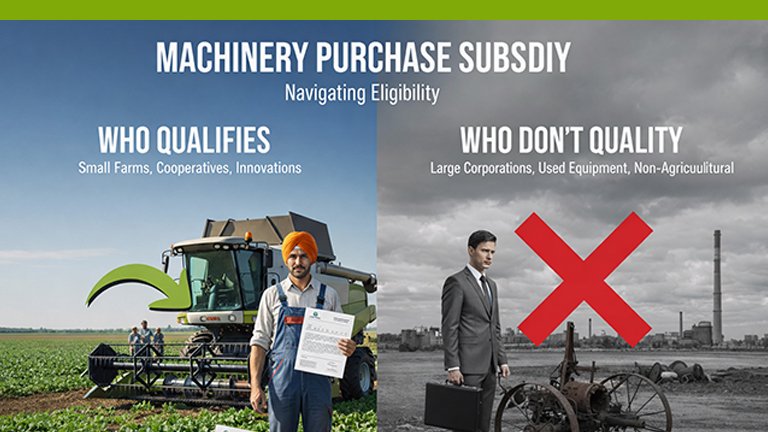
Who Does NOT Qualify for Machinery Subsidy

Not every business qualifies for a machinery purchase subsidy.

Common disqualifications include:

  • ● Pure trading businesses

  • ● Service-only enterprises

  • ● Businesses with incomplete documentation

  • ● Units purchasing second-hand machinery

  • ● Enterprises with major tax defaults

  • ● Businesses exceeding MSME classification limits

  • ● Projects that began before subsidy approval

Understanding these limitations prevents unnecessary application rejection.

Documents Required for Machinery Subsidy Approval

Accurate documentation is critical for approval. Common documents required for machinery subsidy approval include:

  • ● Business registration certificate

  • ● MSME certificate

  • ● PAN and Aadhaar details

  • ● GST registration certificate

  • ● Project report

  • ● Machinery purchase invoice

  • ● Bank loan sanction letter (if applicable)

  • ● Bank statements

  • ● Financial statements

  • ● Quotations from machinery suppliers

Incomplete documentation is one of the most common reasons for delays or rejection.

How the Subsidy Process Typically Works

The machinery subsidy process generally follows these steps:

1. Business applies under the relevant scheme

2. Documentation is verified

3. Bank loan is processed (if required)

4. Machinery is purchased

5. Inspection may be conducted

6. Subsidy amount is released

Timelines vary depending on the scheme and verification process.

Importance of Proper Project Planning

Before applying, businesses should prepare a detailed project plan. This helps demonstrate:

  • ● Financial viability

  • ● Production capacity increase

  • ● Employment generation

  • ● Long-term sustainability

A strong project report improves approval chances.

Common Mistakes to Avoid

Many applications get rejected due to avoidable mistakes.

Avoid the following:

  • ● Applying after purchasing machinery

  • ● Submitting incomplete documents

  • ● Ignoring scheme guidelines

  • ● Overestimating investment figures

  • ● Not checking eligibility properly

Careful preparation reduces rejection risk.

Role of Government Portals

Official scheme details and updates are published through government portals. Reliable information can be accessed from the Ministry of MSME website:

https://msme.gov.in

This portal provides authentic updates about subsidy schemes and eligibility criteria.

Always rely on official sources to avoid misinformation.

Benefits of Machinery Purchase Subsidy

If approved, subsidy benefits can significantly impact business growth.

These include:

  • ● Reduced financial burden

  • ● Improved cash flow

  • ● Faster modernization

  • ● Enhanced production capacity

  • ● Better product quality

  • ● Increased competitiveness

Subsidies help MSMEs scale operations sustainably.

Why Compliance Matters

Compliance plays a major role in subsidy approval.

Businesses with:

  • ● Timely tax filings

  • ● Clean financial records

  • ● Transparent operations

  • ● Proper bookkeeping

are more likely to receive approval.

Government agencies prioritize credible and compliant applicants.

Long-Term Impact of Capital Subsidy

Capital subsidy support helps MSMEs:

  • ● Invest in advanced technology

  • ● Compete globally

  • ● Reduce operational inefficiencies

  • ● Generate employment

  • ● Strengthen supply chains

Machinery modernization often leads to higher profitability and long-term growth.

Final Thoughts

A machinery purchase subsidy can significantly reduce the financial burden of upgrading equipment. However, eligibility depends on several factors including business classification, sector, compliance status, and documentation accuracy.

Understanding machinery purchase subsidy eligibility India, knowing who can apply for MSME machinery subsidy, meeting the eligibility criteria for capital subsidy scheme India, and preparing the correct documents required for machinery subsidy approval will improve your chances of approval.

Subsidy schemes are designed to empower genuine businesses that aim to modernize and grow responsibly. Proper planning, compliance, and accurate documentation are the keys to successfully securing machinery subsidy benefits.

Before applying, always review official guidelines and ensure your business meets all criteria. A well-prepared application not only speeds up approval but also positions your business for long-term growth and competitiveness.

Get your Udyog Aadhaar/MSME registration certificate today!