
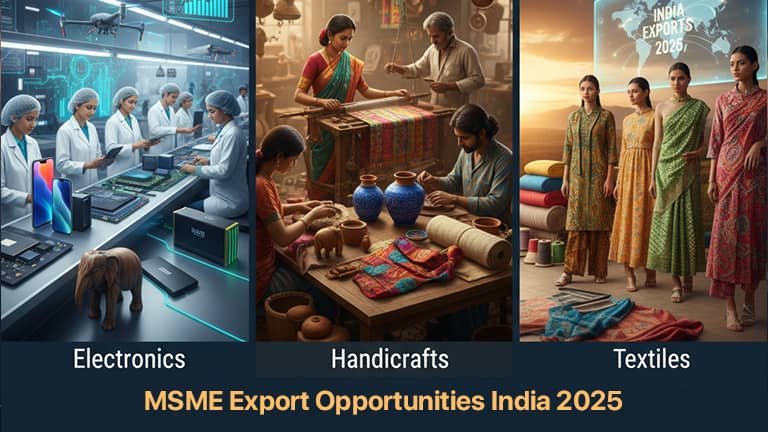
India's MSMEs represent nearly 45% of the country's total exports, with anticipated growth through 2025 driven by governmental backing and evolving international demand patterns. The year 2025 heralds a new era of export opportunities for MSMEs across electronics, handicrafts, and textiles sectors.
The Growing Importance of MSME Exports
Key growth drivers shaping MSME exports in 2025 include:
- Increased global interest in Indian handicrafts and textiles
- Rising electronics exports under the PLI scheme
- Digital adoption and e-commerce marketplace expansion
- Improved trade policy support with financial incentives
Electronics Export MSME: Powering India's Tech Dreams
The electronics sector represents one of the fastest-growing export areas in India, with expanding opportunities across multiple product categories.
2025 Opportunities
- Consumer Electronics (smartphones, wearables, appliances)
- Semiconductors & Components
- EV Components & Batteries
- IT Hardware (laptops, servers, networking devices)
Government Support
- PLI Scheme for Electronics financial assistance
- Customs and logistics acceleration
- Digital B2B platform access (Amazon Global, Alibaba, Flipkart Global)
Handicraft Market Overseas: Expanding India's Cultural Footprint
India's handicrafts are in high demand worldwide, known for their uniqueness and cultural significance — from wooden carvings and Kashmiri carpets to Rajasthani pottery.
Key Export Destinations
- United States & Europe (home décor, furniture, artisanal products)
- Middle East & Gulf Countries (handwoven textiles, jewelry)
- Japan & South Korea (minimalist craft styles)
2025 Growth Areas
- Sustainable and eco-friendly crafts demand
- Luxury handcrafted home décor in Western markets
- E-commerce platform expansion (Etsy, Amazon Handmade, IndiaMart Global)
Trade Policy Support
- Export Promotion Council for Handicrafts international fairs
- Financial programs and artisan modernization subsidies
- Global branding marketing support
Textiles Export: A Traditional Strength with Modern Potential
The textile industry has long been India's stronghold, with opportunities in sustainable fabrics, ready-made garments, and technical textiles. India targets doubling textile exports by 2025.
Major Export Categories
- Cotton & Silk Garments
- Technical Textiles (medical, defense, automotive applications)
- Eco-Friendly Fabrics (organic cotton, bamboo)
- Ready-Made Garments (largest textile export segment)
Trade Policy Support
- RoDTEP scheme for embedded tax refunds
- Mega Textile Parks (PM MITRA) infrastructure development
- Interest Equalization Scheme for affordable export credit
Udyam Export Benefits for MSMEs
MSMEs registered through Udyam Aadhar access enhanced export potential through:
- Priority in obtaining export loans with lower interest rates
- Export Promotion Schemes eligibility (subsidies, duty drawbacks, incentives)
- Priority customs clearances
- Government-sponsored trade fair participation
- Enhanced credibility through official Udyam recognition
Challenges MSMEs Need to Overcome
- Limited awareness of global trade standards
- Technology access restrictions for production scaling
- High logistics costs relative to competitors
- International quality standards compliance requirements
Trade policy support, digital adoption, and Udyam registration help address these barriers effectively.
Conclusion
The year 2025 heralds a new era of export opportunities for MSMEs in India. MSMEs should prioritize Udyam registration, market exploration, and digital platform adoption to capitalize on expanding export growth in electronics, handicrafts, and textiles. Electronics export advancement, handicraft market growth with eco-conscious consumers, and textile expansion through sustainable fabrics all point to a promising future for India's MSME exporters.