
Looking for general information? Visit our main Udyog Aadhar page for an overview, eligibility check, and online registration form.
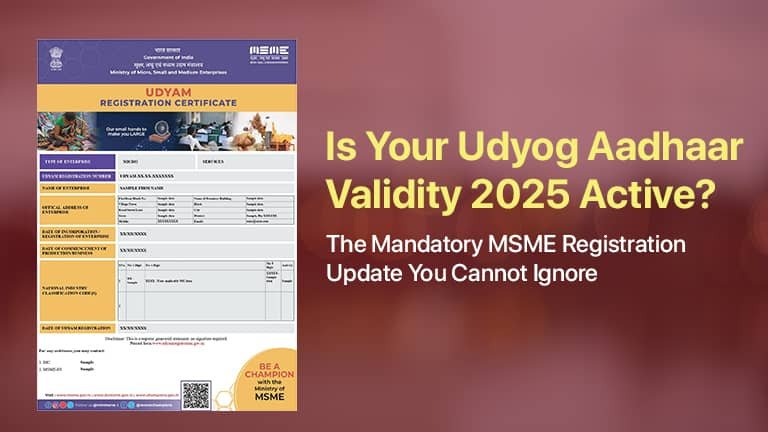
The Udyog Aadhaar Memorandum (UAM) launched in 2015 as a simplified registration process requiring only an Aadhaar card. However, the system had limitations, lacking real-time integration with national databases and causing classification inconsistencies. The Ministry of MSME introduced Udyam Registration effective July 1, 2020, addressing these core needs.
The Dawn of Udyam: Why Udyog Aadhaar was Retired
The new system was built around three core design features:
- Seamless Integration: Fully connected with Income Tax Department (PAN) and GST Network for automatic validation
- Paperless and Self-Declaration: 100% online, free process with no physical document uploads
- Dynamic Classification: Revised MSME definitions based on both investment and annual turnover criteria
The Official Verdict: Is Old Udyog Aadhaar Valid in 2025?
While registration numbers technically exist as historical records, their validity as official certificates expired long ago. The final extension date for the UAM certificate's official validity was typically June 30, 2022. Businesses that have not migrated face serious disadvantages.
The Consequences of Non-Migration in 2025
- Ineligibility for Schemes: Exclusion from central and state-level MSME schemes, subsidies, and grants
- Credit Difficulty: Banks require Udyam Registration Numbers for collateral-free loans and modern lending products
- Lack of Protection: Cannot access MSME Samadhan Portal benefits for delayed payment disputes
- Incorrect Classification: Businesses miss benefits specific to their actual enterprise size under new rules
Navigating the Mandatory MSME Registration Update in 2025
The Udyam framework uses dual criteria, investment and turnover, for classification. The ceilings shown below reflect the revised FY 2025-26 limits announced in the Union Budget 2025-26:
| Category | Investment (Plant & Machinery) | Annual Turnover |
|---|---|---|
| Micro | Not more than ₹2.5 Crore | Not more than ₹10 Crore |
| Small | Not more than ₹25 Crore | Not more than ₹100 Crore |
| Medium | Not more than ₹125 Crore | Not more than ₹500 Crore |
Why Migration is Mandatory Now
The system automatically pulls investment and turnover data from Income Tax Returns and GST filings, offering three key advantages:
- Zero Guesswork: Accurate, automatic enterprise classification
- No Renewal Required: Udyam certificates maintain lifetime validity unless businesses exceed the Medium threshold
- Automatic Updation: System automatically reclassifies enterprises based on latest financial filings
Checking Your Udyog Aadhaar Status and Migration Steps
Verification vs. Migration
- Verification: Confirms old UAM details on the Udyam portal using the 12-digit Udyog Aadhaar Number and registered mobile number
- Migration: Converts old UAM into a new, official Udyam Registration Number
Step-by-Step Guide to Migrate Udyog Aadhaar to Udyam
- Access the Migration Portal: Visit the official Udyam Registration portal and select the option for existing UAM holders
- Authenticate and Fetch Details: Enter your 12-digit Udyog Aadhaar Number and verify via OTP through registered mobile or email
- Update and Re-Classify: Provide PAN and GSTIN; the system automatically recalculates investment and turnover for precise classification
- Receive Your Udyam Registration Number: Obtain the 19-digit Udyam Registration Number as official proof of current MSME status
Why Delaying Migration is a Risk to Your Business
Operating without migration means functioning without official MSME recognition in today's compliance-focused environment. Key benefits are exclusively reserved for Udyam holders:
| Benefit | Description |
|---|---|
| Priority Sector Lending (PSL) | Access to reduced-interest loans with banking preference |
| Government Tenders | Exemption from Earnest Money and Security Deposit requirements |
| Taxes & Exemptions | Income tax benefits and reduced patent/trademark filing fees |
| Infrastructure Subsidies | Technology upgrades, quality certifications, and modern infrastructure support |
| Delayed Payment Protection | Statutory interest claims on late payments via MSME Samadhan portal |
Conclusion
The era of Udyog Aadhaar is over, and the future belongs to the seamlessly integrated Udyam Registration framework. Migration from old UAM to Udyam is non-negotiable for business compliance and accessing government incentives. Migrate today to ensure your business remains eligible for priority lending, government tenders, and all MSME benefits.