
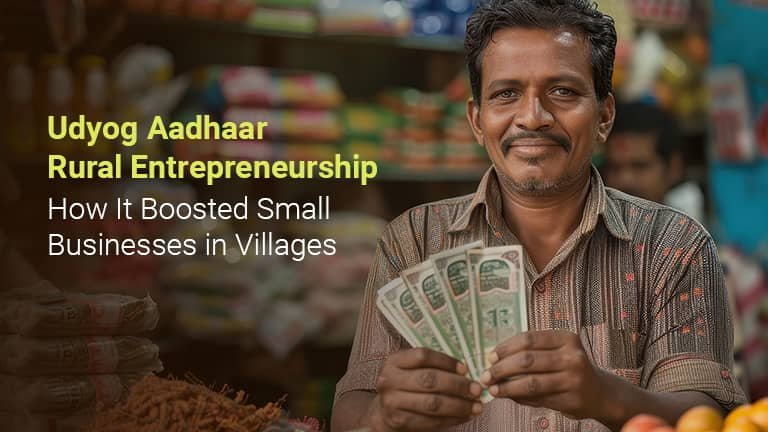
Udyog Aadhaar, officially the Udyog Aadhaar Memorandum, rolled out in 2015 to enable tiny enterprises to obtain micro, small, or medium certification with minimal documentation. Entrepreneurs submit online forms using their Aadhaar ID and receive government approval within minutes. The initiative has been transformative for rural India, unlocking access to low-interest loans, rural insurance, and digital training programs while providing official legitimacy to previously informal operations.
Rural MSME Formalisation — Bringing Villages into the Formal Economy
Many village businesses operated invisibly under informal conditions without proper licenses, preventing access to institutional loans and larger buyers. The Udyog Aadhaar Memorandum brought these operations into the organized economic framework. Registered businesses gained the capacity to present invoices to national retailers, access warehouses, and attract bank financing. The initiative opened pathways to learning programs, digital marketplaces, and cooperative price negotiations while expanding through roadshows and village-level verification offices.
Benefits of Formalisation
- Access to Loans & Subsidies: Registered rural MSMEs qualify for collateral-free loans through CGTMSE scheme, machinery subsidies, and patent/trademark fee support
- Market Expansion: Registration enables bidding on government contracts and accessing international markets
- Legal Protection: Enrolled MSMEs receive safeguards under the MSMED Act against delayed payment issues
Udyog Aadhaar for Artisans – Recognising Traditional Skills
India's traditional artisans — potters, handloom weavers, woodworkers, and metal craftspeople — historically remained unrecognized in the informal sector. The scheme provides targeted support for these practitioners:
- Financial Aid: Enhanced access to small loans at reduced interest rates
- Skill Upgradation: Training and technological support for technique development
- Trade Fair Opportunities: Priority exhibition spots to increase sales visibility
- Subsidies & Discounts: Reduced electricity costs and waived trademark/certification fees
UAM Employment Creation: Bringing Jobs to Rural India
The scheme's primary success involves generating employment opportunities. As registered rural businesses expanded operations, they naturally increased hiring, creating immediate job growth across villages.
- Business Growth: Start-up capital via loans and subsidies enabled MSME expansion and local hiring
- Women on the Move: Women-led self-help groups gained formal recognition, accessing loans and achieving financial independence
- Village Upliftment: New workshop and factory employment distributed prosperity across rural regions
Why Udyog Aadhaar Rural Entrepreneurship Matters
| Challenges in Rural Business | How Udyog Aadhaar Helped |
|---|---|
| Lack of recognition & informality | MSME status through UAM |
| Difficulty in getting loans | Collateral-free & low-interest loans |
| Limited market access | Participation in tenders & trade fairs |
| Weak artisan support | Subsidies, training & promotion |
| High unemployment in villages | UAM employment creation opportunities |
Udyog Aadhaar by the Numbers
Millions of local units, including substantial rural representation, completed registrations post-launch. Government documentation confirms most registrants qualify as micro-enterprises, validating the scheme's reach into India's smallest business segments. Rural entrepreneurs now access PMEGP, Stand-Up India, and Skill India programs with enhanced ease.
Conclusion
The Udyog Aadhaar initiative rekindled entrepreneurial momentum in rural regions. Through MSME classification and artisan training initiatives, the program formalized, empowered, and created employment pathways. Rural entrepreneurs transcended simple registration to obtain credibility, financing, and business contracts — establishing an inclusive economic expansion narrative for the nation.